
Getting children involved in household chores is not just about having help around the house – it is also about giving them essential life skills, a sense of responsibility and self-confidence. When children take an active part in everyday tasks, they learn that a home works best when everyone contributes. At the same time, they develop a natural understanding of teamwork, routines and the importance of pulling together. It can be tempting to do everything yourself to save time and avoid arguments, but involving children from an early age lays the foundations for good habits and a strong work ethic that will stay with them throughout their lives.
Children love feeling included, and they grow when they realise that their efforts matter. The aim is therefore to make household tasks positive, fun and meaningful rather than something they have to “get through”. When you create small opportunities for success and give your child room to practise and improve over time, you also strengthen their independence and sense of achievement. By adapting tasks to their age, temperament and interests, and incorporating play, creativity and recognition of their efforts, everyday tasks can suddenly become exciting opportunities to learn.
This article offers practical and inspiring ways to involve your child in household chores – with a focus on fun, learning and enjoying time together. The goal is progress, not perfection: helping children develop a natural enjoyment of helping out, an understanding of responsibility and a sense of pride in being an important part of the family. When chores become small victories, both your relationship and your child’s belief in themselves grow stronger – one little task at a time.
Why Is It Important to Involve Children in Household Chores?
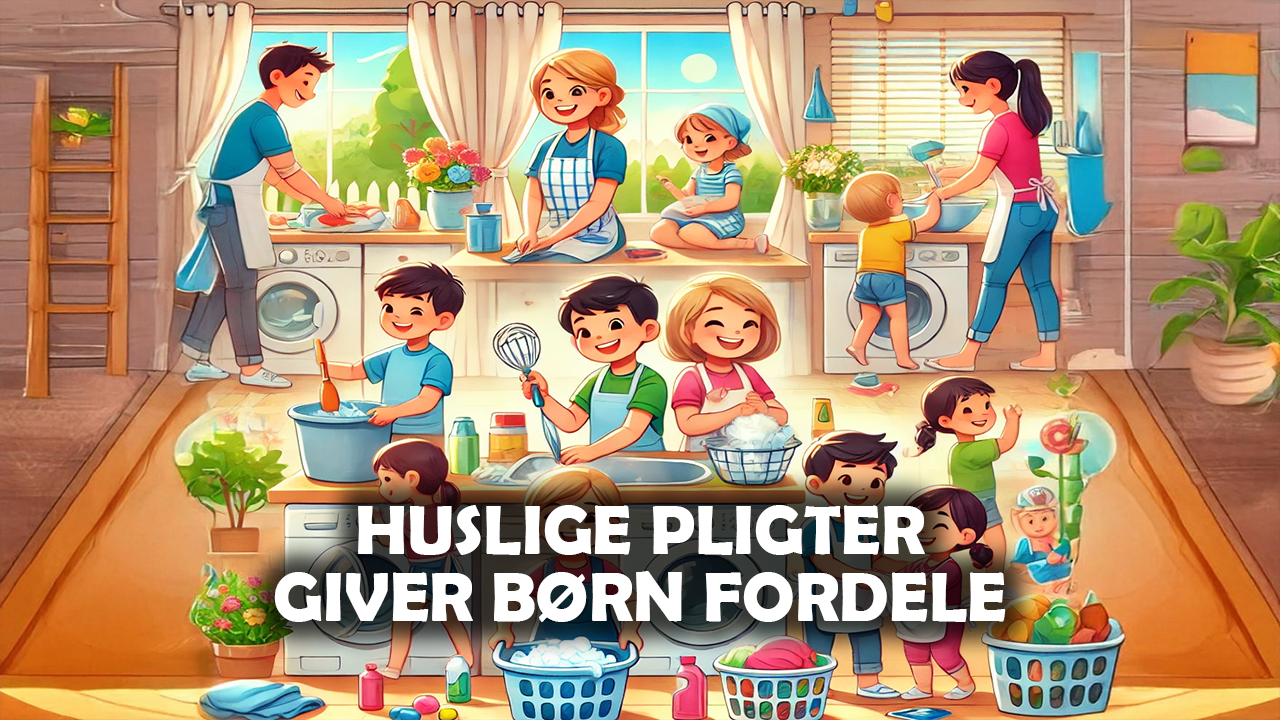
Involving children in household chores is not just about getting help with everyday tasks – it is an important investment in your child’s development. When children take part in practical tasks, they learn responsibility, independence and the importance of teamwork. They feel that they are a valued part of the family and that their contribution makes a difference. This strengthens both their self-confidence and their emotional connection to family life at home.
Household chores also develop important life skills that stay with children throughout their lives. From laying the table and tidying up to sorting laundry and helping with cooking – every task teaches your child something new about routines, patience, planning and problem-solving. As your child masters new skills, they become better equipped to manage future responsibilities independently – at school, in social relationships and later in working life.
Taking part also helps your child understand that a family is a team. When everyone contributes, it creates harmony and mutual respect. Children learn that a home does not simply “run itself”, but requires effort, thoughtfulness and cooperation. This is a valuable life lesson that supports both maturity and empathy.
By making household chores a natural and positive part of everyday life, you encourage not only practical skills but also a sense of belonging, responsibility and satisfaction in a job well done — values that extend far beyond the kitchen table and into your child’s future.
Ideas to Inspire You – Support Your Child’s Development Through Household Chores
🧼 Help Children Discover the Joy of Learning Through Household Chores
When you see household chores as small learning activities for your child, everyday life becomes an opportunity for development. Let your child explore, experiment and take part in practical tasks such as laying the table or sorting toys. Allow room for mistakes, and emphasise your child’s effort rather than the result. This way, household chores become a supportive space where your child can develop new skills and experience the pride of mastering something independently, rather than a burden.
🍽️ Build Your Child’s Independence Through Household Chores
Even small household tasks such as pouring milk, choosing snacks or putting clothes in the laundry basket teach children to take initiative and responsibility. When your child sees that they can manage tasks independently, their confidence grows. Explain why the tasks matter so that your child understands their purpose rather than simply following routines. This makes household chores a way to help your child become more independent and confident. Tasks such as cooking, cleaning and organising also develop essential skills that prepare children for adult life.
🧹 Bring the Family Together Through Household Chores
When the whole family helps one another, you send a powerful message: “We all pull together here.” Let your child take part in simple household chores such as wiping the table or picking up rubbish while you chat, laugh and enjoy spending time together. Shared tasks make the home a place of belonging and respect — and your child learns that togetherness, teamwork and responsibility go hand in hand in family life.
🧺 Choose Household Chores That Suit Children’s Ages and Support Their Wellbeing
Adapt household chores to your child’s age and personality. Younger children can help sweep up crumbs, stack socks or water plants. Older children can pack their lunchboxes, help with cooking and keep their own school bags organised. When tasks suit your child’s stage of development and age, they experience success and feel motivated — and household chores become a natural part of their daily responsibilities.
🥕 Make Household Chores Fun and Motivating for Your Children
Use play, praise and imagination. Let your child be a “mini chef”, a “tidying detective” or a “plant caretaker”. Turn household chores into little missions, competitions or role-playing games. When you turn everyday tasks into fun activities, children see chores as something exciting and meaningful — rather than something to avoid.
REMEMBER – When children help with household chores, both their skills and their sense of togetherness grow. Teamwork around the home builds strong family bonds, a joy for life and resilient children.
Make Household Chores Fun for Children
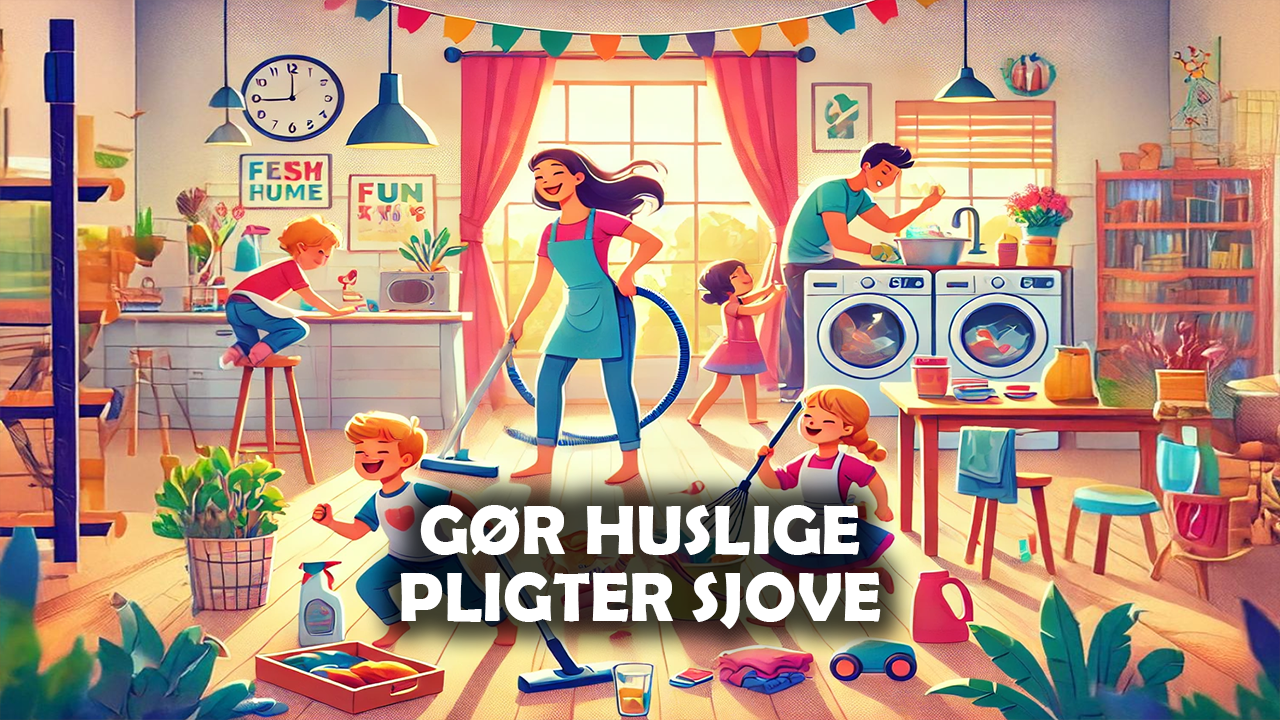
When children discover that household chores can be fun, creative and full of togetherness, they become much more motivated to take part. Making tasks positive and playful helps children associate responsibility with enjoyment – rather than simply something they “have to” do. When we, as adults, add imagination, recognition and humour, we create a learning environment where children develop both practical skills and self-confidence.
The aim is not to turn cleaning into a game for your child every time, but to use small touches that make the experience easier and more motivating. Music, timers, colour coding, “missions” and reward systems can completely change the atmosphere. When children have the opportunity to take ownership – for example, by choosing a household task or deciding the order – they feel more involved and capable.
Making household chores a shared family activity also creates valuable moments together. Children learn that chores are not a punishment, but a natural part of life, and that they can have fun while helping and learning. The earlier children experience this connection, the better prepared they will be later in life when they have to balance responsibilities, their home and everyday life themselves.
Ideas to Inspire You – Creative Ways to Make Household Chores Fun for Children
🎶 Bring Rhythm and Energy to Children’s Household Chores with Music
Create a playlist of your child’s favourite songs and turn household chores into a mini dance party. Music brings energy and makes routines feel less of a burden. Set a timer for the length of one or two songs and “tidy up before the music stops”. You can also have a “dance break” between household tasks to keep motivation high. When children feel the rhythm and laugh along the way, household chores become an enjoyable activity rather than a boring routine. Music also helps children associate responsibility with positive feelings and shared experiences.
🏁 Turn Household Chores into Competitions for Children
Children love challenges, and a little healthy competition can make household chores extra motivating. Create friendly races such as “Who can pick up the most LEGO bricks in two minutes?” or “Who can put clothes in the laundry basket the fastest – without forgetting the socks?”. You can also create a “family tournament”, where each completed task earns points that can later be exchanged for an enjoyable reward, such as choosing a film, deciding what to eat one day or playing games with Mum or Dad. When competitions are used positively, household chores become little triumphs where children experience excitement, a lively pace and enjoyment – while learning responsibility and routines in a fun, inclusive way.
🏅 Use Games and Mini Missions to Engage Children in Household Chores
Turn household chores into little missions: “Find all the socks”, “See how many books we can stand upright in two minutes” or “Clean the table like a superhero”. Give your child small, age-appropriate challenges and join in so that the tasks feel like teamwork. You can also award points for each completed household task. These points can be exchanged for rewards such as extra screen time or a trip to the cinema. When children discover that chores can be exciting and have a clear goal, they feel motivated to make an effort again and again. Missions turn household chores into small victories with plenty to feel proud of.
🌈 Use Colours and Choices to Engage Children in Household Chores
Build motivation by letting your child choose between two or three household chores, giving them a sense of control and freedom. Colour-code the tasks – for example, red tasks (quick), green tasks (creative) and blue tasks (shared). When children see household chores as an exciting choice rather than an order, they become more engaged and enjoy helping more. The more involved your child feels, the more motivated they become.
🧸 Include Toys and Stories in Children’s Household Chores
Let teddy bears, toy figures or dolls “help” with the tasks. For example, your child could teach their teddy how to fold clothes or let a toy figure be the “inspector” who approves the tidying. This blends imagination and reality, making household chores feel like a game and a story. This approach develops your child’s creativity while getting the tasks done.
✅ Reward Small Steps Forward and Praise Children Enthusiastically for Their Efforts with Household Chores
Give your child specific praise for their efforts: “Well done for putting your clothes in the basket all by yourself!” or “You’re really helping the family – thank you so much!”. Create little sticker books, drawings or “family handshakes” that your child can use to collect points for household chores. The reward is not just the sticker, but the feeling of achievement. Recognition has a powerful effect and motivates children to keep going with enjoyment and pride.
REMEMBER – Enjoying housework starts in childhood, and when household chores become playful activities for children, helping out in everyday life becomes a source of joy and enjoyable time together – for both children and adults.
Bring Learning into Your Children’s Household Tasks
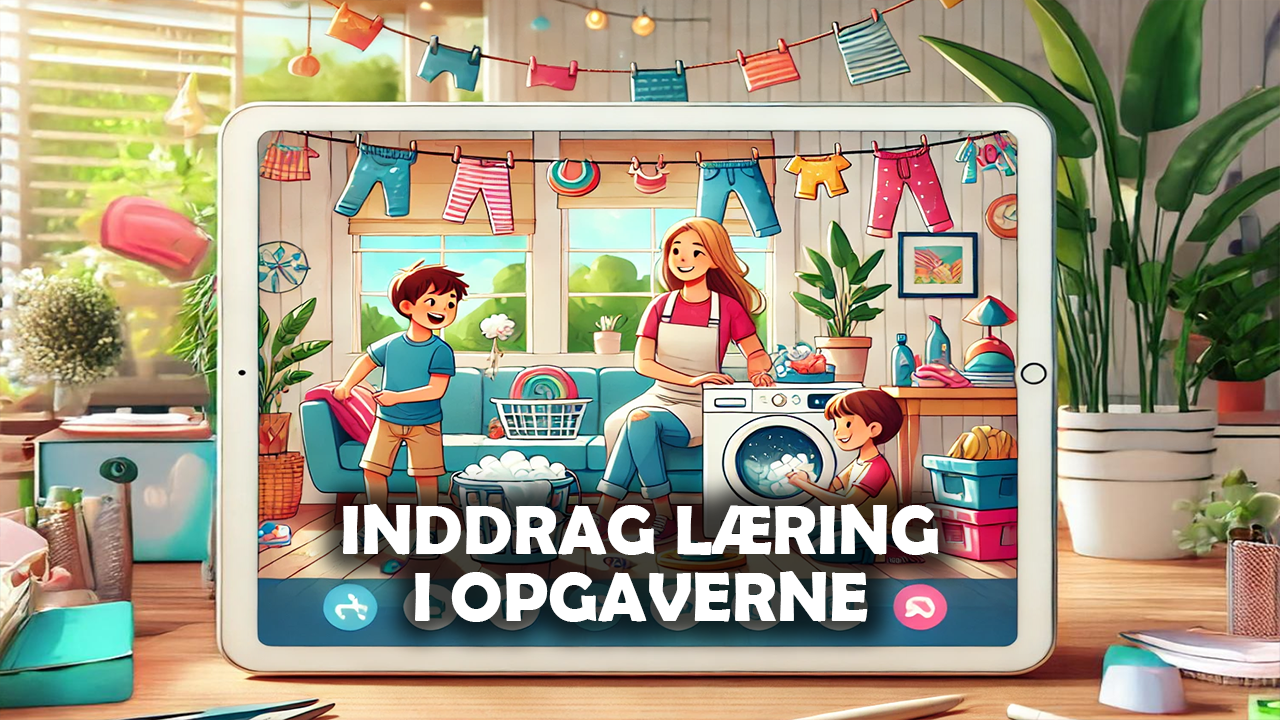
When children take part in household tasks, they gain more than practical skills – they also learn important skills that support their development. By combining household tasks with learning, you can help your child develop motor skills, number sense, concentration and problem-solving skills naturally. This turns everyday chores into valuable opportunities to practise, where curiosity and responsibility go hand in hand.
The aim is not to turn every task into a lesson for your child, but to make the most of the small learning opportunities found throughout the home. Ask your child to count carrots while you cook, pair up socks, sort toys by colour or lay the table and put everything in the right place. When learning becomes a natural part of household tasks, children feel both engaged and proud of their efforts – and discover how new knowledge can be put into practice.
By encouraging your child to think, explore and take responsibility, you strengthen not only their academic skills but also their self-confidence, concentration and ability to work with others. Everyday life is full of little teaching moments – and when you use household tasks as learning opportunities, you give your child a strong foundation for both school and life in general.
Ideas to Inspire You – Creative Ways to Bring Learning into Children’s Household Tasks
🔢 Use Household Tasks to Develop Your Child’s Understanding of Numbers and Quantities
Let your child count ingredients, measure water for plants or count how many items are placed on the table. When children use numbers and quantities in household tasks, maths begins to make sense in practice. Ask questions along the way – “How many more cups do we need?” or “Can you find three spoons and two forks?”. For slightly older children, you can ask them to measure ingredients while cooking or work out how many portions a recipe makes. This way, your child develops logical thinking and number sense while household tasks become a fun and meaningful activity.
🔬 Teach Your Child About Science Through Household Tasks
Household tasks can be a wonderful introduction to the world of science. Let your child experience little experiments in everyday life – for example, by watching how dough rises, how water evaporates from a saucepan or how plants grow when cared for. Explain simple concepts such as evaporation, fermentation, growth and temperature as you work together. Make small observations: “What happens if we water the plant?” or “Why does washing-up liquid form bubbles?”. When children have the chance to investigate and ask questions during household tasks, science becomes tangible and exciting – while they learn about the world through their own experiences and curiosity.
🎨 Develop Your Child’s Creativity Through Household Tasks
Involve your child in decorating, laying the table or cooking, with opportunities to choose colours, create patterns and experiment with shapes. Household tasks such as decorating a salad, arranging fruit or folding napkins give children space to think creatively and express themselves. Praise your child’s ideas and different approaches – this builds their confidence to try new solutions and shows them that household tasks can also be creative and inspiring.
🧠 Practise Problem-Solving with Your Child Through Household Tasks
Set small challenges and ask questions: “How can we fit everything in the cupboard?” or “How can we make tidying up quicker?”. Let your child find solutions and try out ideas. When children have the chance to think and experiment during household tasks, they develop logical thinking and organisational skills. This helps them understand that problems can be solved with patience, focus and imagination.
🤲 Strengthen Your Child’s Fine Motor Skills Through Household Tasks
Let your child pour water, peel bananas, wipe the table or fold clothes. Many small household tasks require precision and practice, helping children develop their fine motor skills. Remember to be patient – children learn through repetition and small improvements. Every household task becomes an opportunity to practise coordination and control while your child feels capable and independent.
📚 Expand Your Child’s Vocabulary and Language Skills Through Household Tasks
Take time to talk, explain and describe actions as you carry out household tasks together. Name ingredients, utensils and actions: “We’re peeling carrots”, “We’re folding towels” or “We’re sorting laundry by colour”. While doing housework, you can also play word games such as “Find a word that starts with the letter A”, or read recipes together and explain the meaning of unfamiliar words. This helps your child become familiar with new words and concepts. As household tasks strengthen their language skills, your child becomes better able to communicate, understand instructions and express their own ideas.
REMEMBER – When household tasks become little learning moments for your child, you build their skills, self-confidence and curiosity – day after day.
Age-Appropriate Household Tasks for Children

Choosing age-appropriate household tasks is key to successfully involving your child in daily routines at home. When tasks match your child’s stage of development, they feel capable, motivated and proud. Tasks that are too difficult, however, can cause frustration, while tasks that are too easy can lead to boredom. Finding the right balance is essential – so your child experiences a sense of achievement while being challenged in a positive way.
Introducing household tasks gradually helps your child develop both responsibility and self-confidence. Younger children can start with simple, safe tasks such as putting toys in a basket or helping to wipe a table. As your child gets older, they can take on more responsibility, such as laying the table, sorting laundry or looking after their own bag and clothes. What matters most is that your child can succeed and feels that they make an important contribution at home.
As a parent, it helps to demonstrate, explain and practise together before giving your child a task to do independently. And remember – it is about learning and involvement, not perfection. When children have the chance to practise, make mistakes and try again, supported by praise and patience, they develop both emotionally and practically – step by step and task by task.
Ideas to Inspire You – Household Tasks for Children by Age
👶 First Household Tasks for Young Children (Ages 2–3)
At this age, children can begin practising very simple household tasks that give them a sense of participation. Let your child help put toys in the basket, wipe small marks off the table or put napkins on the table. At this stage, household tasks are about creating a positive routine where children feel included and understand that working together is a natural part of home life. Focus on play, praise and repetition – this provides a reassuring introduction to responsibility.
🧒 Age-Appropriate Household Tasks for Children (Ages 4–6)
Children can now manage slightly more complex household tasks, such as sorting clothes by colour, helping to lay the table, fetching their shoes and hanging up their coats. They can also practise loading plastic tableware into the dishwasher or washing fruit. At this stage, children learn about routines, doing things in order and respecting shared spaces. When you explain tasks with short instructions and allow room for their own initiative, their ability to take responsibility grows.
👦 Household Tasks That Build Skills for School-Age Children (Ages 7–9)
Children of this age can take on more household tasks and begin to understand consequences and responsibility. Let your child help empty the dishwasher, clean their room, pack their school bag or help with simple food preparation tasks such as stirring, peeling eggs or washing vegetables. These tasks teach children planning and independence – and that household tasks are a way to contribute for everyone’s benefit, not just something they do because they are asked.
👧 Bigger Household Tasks for Tweens (Ages 10–12)
Children at this stage can carry out household tasks more independently, such as vacuuming, folding clothes, making simple meals, putting groceries away or caring for pets. This is also a good time to let your child take responsibility for their own calendar, sports bag and school projects. Here, children develop problem-solving skills, self-confidence and a sense of responsibility through household tasks that reflect “real” adult responsibilities – in a supportive learning environment.
🧑 More Independent Household Tasks for Teenagers (Ages 13+)
Teenagers can manage most household tasks with minimal guidance – doing laundry, cooking, planning food shopping, keeping their rooms organised and helping with cleaning. At this stage, household tasks provide important practice in independence and preparation for adult life. Teenagers learn time management, responsibility and practical skills that give them a strong foundation for the day they leave home. Recognise their efforts and give them ownership – this strengthens their maturity and willingness to cooperate.
REMEMBER – When household tasks match a child’s age and development, responsibility can flourish – and children grow with every little task. The right types of household tasks at the right age help children become resilient, independent and confident.
Reward Systems and Recognition for Children’s Household Tasks
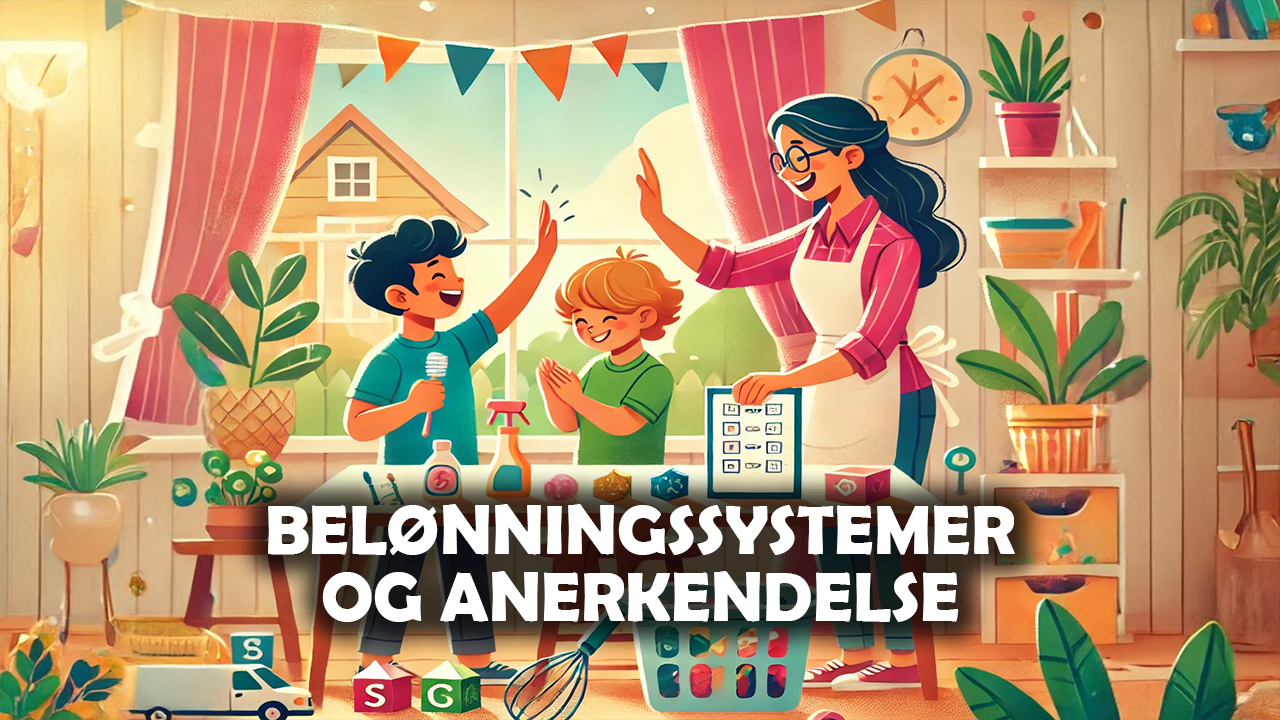
Reward systems and recognition can be powerful tools for motivating children to take part in household tasks, as long as they are used thoughtfully. The aim is not for your child to help only to earn a prize, but for rewards and praise to support a positive experience of responsibility, effort and togetherness. When feedback is warm, specific and encouraging, children learn that household tasks have a purpose and that their contribution matters.
A good reward system does not act as “payment”, but as a reminder that your child is doing something valuable. Small rewards such as extra quality time together, a hug, a sticker or getting to choose an activity can be enough to spark enthusiasm and pride. Most important, however, is verbal recognition: “Well done for taking the initiative all by yourself!” or “You make a big difference to the family!”. These kinds of comments build self-esteem and help children feel seen and appreciated.
When you combine rewards with recognition and involvement, household tasks become more than just a duty – they become an opportunity for your child to grow, both emotionally and practically. Over time, your child will discover that the joy of helping comes from within, and that the family’s gratitude is itself a significant and meaningful “reward”.
Ideas to Inspire You – Positive Ways to Reward and Recognise Children for Completing Household Tasks
⭐ Create a Points or Sticker System for Your Child’s Completed Household Tasks
Make a chart or calendar where your child collects stickers or points for household tasks such as laying the table, tidying up or putting clothes in the laundry basket. Each time your child completes a task, they receive a visual reward. Once they have collected enough points, they can earn an enjoyable family activity, a trip to the ice cream shop or the chance to choose dessert. A points system helps children see that regularly completing household tasks leads to results, while developing patience, a sense of purpose and pride.
🎁 Reward Children’s Completed Household Tasks with Experiences Rather Than Things
Instead of physical gifts, the reward can be time and experiences: a film night, baking a cake, reading an extra bedtime story or choosing Friday’s menu. When the reward is time together, children learn that household tasks bring not only praise but also more connection and enjoyable moments together. This strengthens family bonds and makes children proud that their efforts contribute to a positive atmosphere and happy times together.
💬 Use Specific, Affectionate Praise When Children Complete Household Tasks
Praise should be specific: “I’m really impressed with how neatly you put the shoes away” or “You took responsibility all by yourself – well done!”. The more specific the praise, the better your child understands what they did well. When children see that their household efforts are appreciated, they develop inner motivation and a sense that their contribution really matters to the family.
🕹️ Give Children “Bonus Choices” for Completing Household Tasks
Create a small selection of “bonus choices” that your child can access after helping with a certain number of household tasks. These might include choosing a television programme, taking the front spot on a bike ride, deciding what to have for dinner, choosing a game or picking the day’s play activity. This makes household tasks a way to have more influence and a greater say in family decisions, which is a strong motivator – especially for children who thrive on having some control and shared responsibility.
👐 Give Children Responsibility as a Reward for Completing Household Tasks
When your child has shown the ability and willingness to manage household tasks, you can reward them with bigger or more “important” jobs, such as pouring juice, caring for plants or helping younger siblings. Your child sees this as a sign of trust and maturity. Here, the reward is not an object, but the feeling of being grown-up, capable and important – which strengthens self-esteem and a sense of responsibility.
REMEMBER – When praise and rewards for household tasks are rooted in love and learning, tasks become small victories that strengthen both your child and your family. When efforts around the home are noticed, appreciated and rewarded, the desire to help with other household tasks grows stronger.
Create a Household Task Routine for Your Children
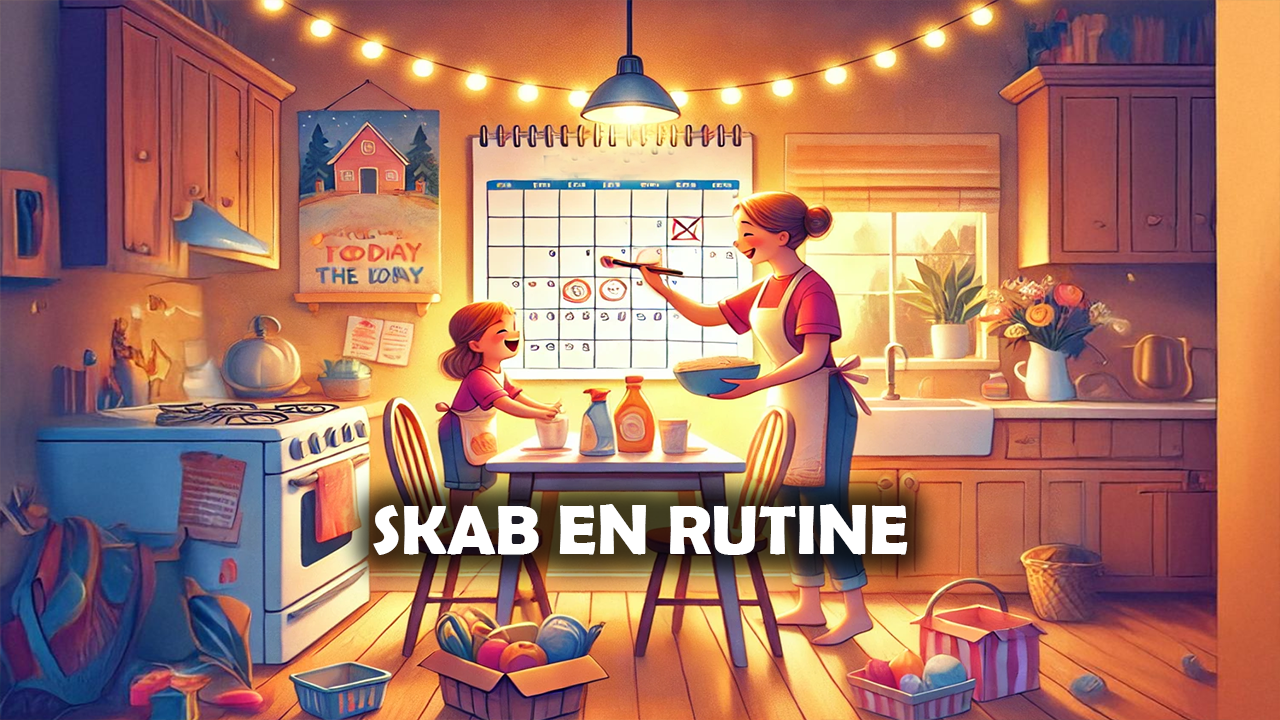
When household tasks become a natural part of everyday life, they create calm, structure and a sense of responsibility for children. Routines help children understand expectations, plan their day and contribute to family life without a struggle or negotiations every time. When children know what is expected and when tasks need to be done, they feel secure, seen and capable.
An effective household task routine for your child develops gradually. Start with a few manageable household tasks and introduce new elements as your child becomes more comfortable and capable. Routines need to be clear and consistent, but also flexible enough to allow your child to practise, have good days and challenging ones – and still feel supported. By making household task routines positive and predictable, you give your child strong organisational and social skills that will stay with them throughout school and adult life.
It is also important that routines feel like a contribution to family life rather than a punishment. Enjoyment, praise, involvement and small successes build motivation and make everyday tasks easier to complete with a smile and a willing attitude. Over time, your child will not simply carry out the tasks – they will understand their value as an important part of family teamwork.
Ideas to Inspire You – Positive Ways to Establish Household Task Routines for Children
🕑 Set Aside Time Each Day for Your Child’s Household Tasks
Set regular times during the day for your child to do household tasks, such as after breakfast or before bedtime. When household tasks are linked to specific routines, it becomes easier for your child to remember and complete them without arguments. Over time, children learn that tasks are not optional, but a natural part of the rhythm of the day, just like brushing their teeth or going to school.
📋 Create a Visible Household Task Plan for Your Child
Use a poster, a board or a simple, colourful chart with pictures and text to show which household tasks your child needs to do and when. Use pictures for younger children who cannot yet read.
Visible plans help children understand responsibility and establish structure. They also provide a sense of control and motivation, as children can tick off tasks or move symbols once the tasks are complete. This makes the routine clear, manageable and more positive.
🔄 Build Your Child’s Household Routines Through Repetition and Short Tasks
Start with tasks that can be completed quickly, giving your child a sense of achievement every day. Tasks such as putting shoes away or making their bed take only a few minutes, but have a big impact when done regularly. Repeating routines helps build habits that become a natural part of your child’s day. Gradually, you can add more household tasks and increase responsibility, but the starting point should always be establishing consistent habits through small actions that feel manageable and motivating.
🤝 Involve the Whole Family in Household Tasks
Turn household tasks into family activities where everyone takes part at the same time, so your child sees that tasks are best tackled together. When you work alongside your child, the routine becomes a shared effort rather than a “job”. This shows your child that household tasks are just as natural for adults as they are for children – and that teamwork makes everything easier and quicker. It also creates enjoyable moments and positive memories.
🎯 Recognise Your Child’s Progress with Household Tasks
Children flourish when they feel that their efforts are noticed. Praise your child for following routines and doing their best – even on days when things do not go perfectly. When your child knows that you notice their progress, they will feel proud and motivated to keep up with their household tasks. Recognise small steps forward and allow routines to develop alongside your child’s confidence and sense of responsibility.
REMEMBER – When regular household routines become a natural part of everyday life, children learn that responsibility is a strength – and that small daily actions around the home lead to big results. Repetition, praise and a regular rhythm make household tasks a positive routine for your child.
Overcome Your Children’s Resistance to Household Tasks

Even the most motivated children can sometimes resist doing household chores. This is perfectly natural – children live in the moment, and if tasks feel boring or difficult to understand, they often choose play, imagination or an immediate reward instead. The key is not to avoid resistance, but to handle it calmly, lovingly and constructively, so that children learn that responsibility and cooperation can be both rewarding and meaningful.
When you respond to your child's resistance with understanding rather than frustration, you send a powerful message: “I see you, and we'll work through this together.” Explain why household chores are important and help your child understand that everyone in the family contributes. The aim is not to make your child obey blindly, but to develop a positive attitude towards responsibility. Small choices, clear boundaries, patience and praise can gradually turn resistance into motivation.
It is also important to adjust your expectations if your child is tired, overwhelmed or emotionally challenged. Flexibility and empathy strengthen your relationship and create space for household chores to become a natural part of everyday life without conflict. When your child feels seen, guided and supported, they will gradually take on more responsibility – and discover that they can succeed.
Inspiration List - Strategies For Reducing Children's Resistance To Household Chores
🧠 Explain The Purpose Of Household Chores To Your Child
Children are more likely to accept household chores when they understand why they need to do them. Explain to your child that helping with household tasks is part of being a family, where everyone helps one another, and that it is sometimes necessary to ensure the whole family has time to enjoy a cosy evening together. Explain it in a way your child can understand – “We help each other so we have more time to play” or “When you put your clothes away, you always know where they are.” When children understand the purpose behind household chores, their reluctance decreases – and their desire to be part of the family grows.
🎭 Turn Household Chores Into A Game For Your Child
Resistance often melts away when things become fun for children. Create games such as “tidying-up races”, “who can find the most things?” or “the superhero who saves the living room from mess”. Use music, timers or role-play. When your child smiles and laughs, household chores no longer feel like a battle, but an exciting challenge. And motivation always thrives when there is laughter in the air.
🗓️ Establish A Regular Routine For Your Child's Household Chores
Resistance is often caused by unpredictability. Having regular routines for household chores makes it easier for children to follow them without arguments. When tasks become something they “just do” after breakfast or before bedtime, negotiations and uncertainty disappear. Routines provide security – and a sense of security makes chores easier to accept.
✅ Give Your Child Small Choices About Household Chores
Children often want to feel in control – even when it comes to household chores. Instead of dictating a task, let them help plan which chores need to be done and when they should be completed. “Would you like to wipe the table or water the flowers?” or “Would you like to start with the shoes or the clothes?” When children feel they have a say, resistance decreases and their willingness to cooperate grows. Small choices create a strong sense of ownership and responsibility.
🧩 Break Household Chores Down Into Smaller Steps For Your Child
Resistance can be caused by feeling overwhelmed. A big task such as “tidy your room” can seem daunting, whereas “put the soft toys here” and “put the books on the shelf” feel manageable. Help your child tackle one task at a time, and praise them for every small step. When children experience success in small stages, their confidence to keep going grows – even when faced with more demanding household chores.
REMEMBER - When you respond to your child's resistance to household chores with patience, structure and understanding, household chores become a learning journey – not a battle. Resistance is natural – understanding and patience foster cooperation, and when children feel seen, they become more willing to help.
If your children are often negative about household chores, you may need to communicate with them positively on an ongoing basis, gradually involving them in activities you can do together. You can find a little more inspiration for positive communication within the family in our article – Great Tips On How To Strengthen Communication And Connection Within The Family So Everyone Can Enjoy A Happier Everyday Life
Conclusion

Engaging your child in household chores can take time and patience, but the benefits are enormous and extend far beyond a tidy living room and a cleared kitchen worktop. When children are given the opportunity to contribute, feel valued and develop practical and social skills, you lay the foundations for independence, responsibility and strong self-confidence. Every little task, every pat on the back and every shared success helps shape a child who dares to try, dares to make mistakes and dares to grow.
Household chores should not be seen as something children simply “have to” complete, but as a valuable opportunity for learning, connection and cooperation. When we approach children with patience, creativity and warmth, we show them that helping, taking responsibility and being part of a team can feel both natural and meaningful – and even fun. By turning chores into small learning moments and enjoyable routines, we teach children not just how to help, but also how to thrive as part of a home and a community.
Take small steps, be consistent and remember to celebrate progress along the way. What matters most is not perfection, but the process – and the relationships and strength that grow through the family's shared efforts. With the right approach, household chores can become a source of joy, pride and togetherness for both children and adults. So put on some music, get out the cleaning gloves and turn household chores into something the whole family can enjoy together!
REMEMBER - Turn household chores into an opportunity for togetherness and joy – and watch your child flourish. When children learn to help and feel valued, it becomes an important stage in their development towards becoming responsible adults.
Mini Guide - How To Engage Your Children In Household Chores In A Positive And Constructive Way
This mini guide summarises the article above and offers useful tips for engaging your child in household chores in fun and educational ways.
👶 Start Your Child Off With Small Household Chores
Begin with simple, manageable household tasks so your child can experience success and feel motivated. Small victories encourage them to help more.
🗣️ Explain The Purpose Of Household Chores To Your Child
Help your child understand why household tasks are important. When the purpose is clear, the task feels more natural and meaningful.
🎯 Adapt Household Chores To Your Child's Age And Ability
Make sure household tasks are suited to your child's abilities. Age-appropriate chores build self-confidence, while tasks that are too difficult can lead to frustration.
🎮 Make Household Chores Fun For Your Child
Use play, music, competitions or imaginative role-play. When household tasks feel like games and adventures, engagement grows naturally.
🤝 Be A Role Model And Do Household Chores Together With Your Child
Children imitate adults. Show them that you take responsibility for household chores yourself, and invite your child to help – this strengthens both learning and family togetherness.
⭐ Use Praise And Recognition To Encourage Your Child With Household Chores
Highlight the effort your child puts into household chores, not just the result. Tell them how well they are trying and helping. Recognition is more motivating than demands.
🕒 Establish Routines And Structure For Your Child's Household Chores
Regular times and repetition make household chores natural and predictable. Consistency creates a sense of security and helps establish good habits.
🧩 Give Your Child Choices About Household Tasks
Let your child choose between different household tasks. Small choices create a sense of ownership and make it easier for them to agree to help with household chores.
REMEMBER - A child who is engaged in household tasks is a child who feels valued, included and seen – starting with one small household chore often leads to taking on more and bigger tasks over time 😊
If you need more inspiration on how to involve your child in household chores in a positive way, you can watch this video – How to Get Children to Do Chores
Do you have experience and/or knowledge of how to engage your child in household chores in a positive way? We would love to hear your thoughts and/or suggestions in the comments section, including any additional ideas for good ways to involve your child in household chores for the benefit of the whole family's well-being and happiness.