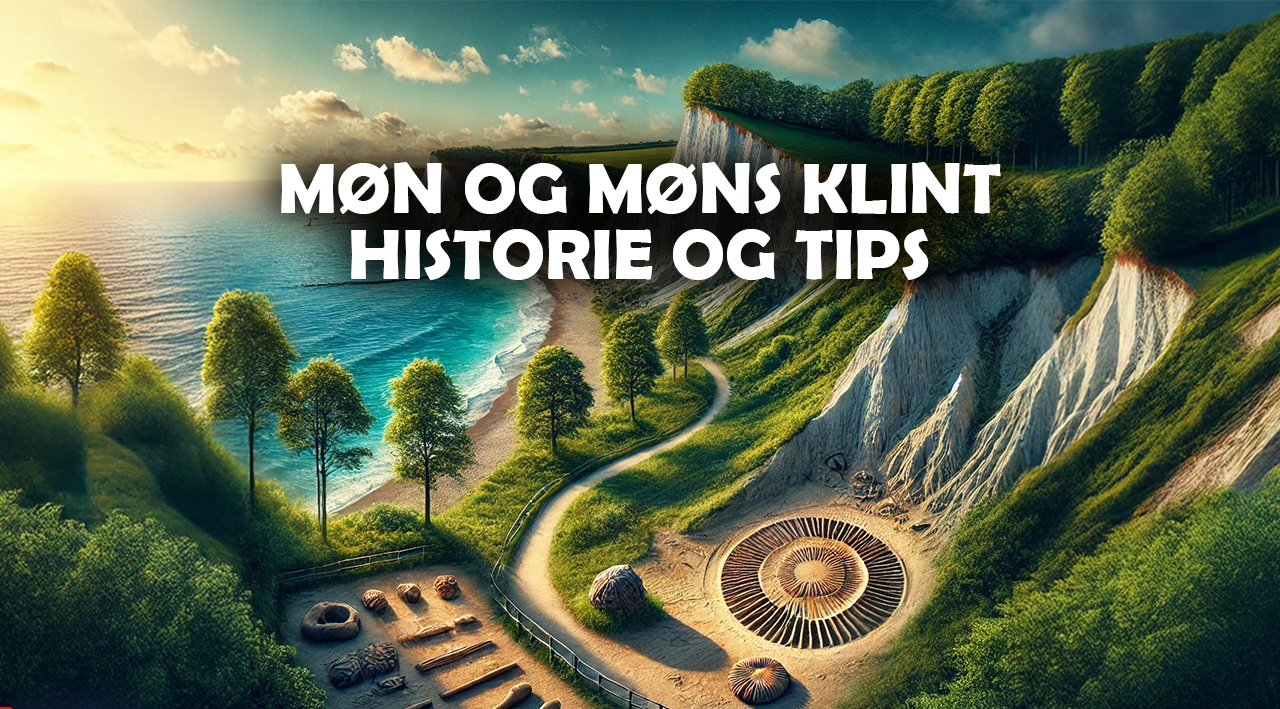
Møn is one of Denmark’s most beautiful islands and a special place where nature, history and culture come together. The island is perhaps best known for Møns Klint, the iconic cliff landscape that attracts visitors from around the world. But Møn offers much more than its impressive chalk cliffs.
In this article, we briefly explore Møn’s history and share tips for the best experiences and attractions on Møn
The History of Møn and Møns Klint
1. Geological Background – Møns Klint as Nature’s Masterpiece
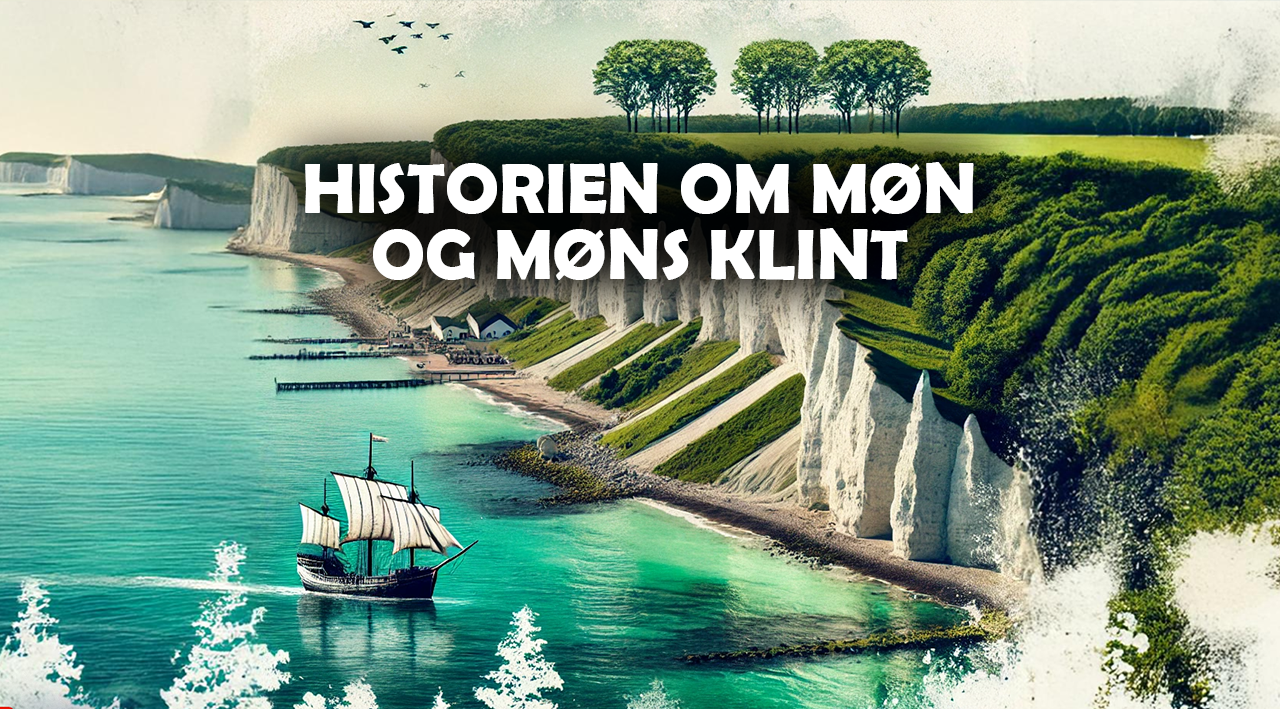
Møns Klint was formed around 70 million years ago during the Cretaceous period. The cliffs consist of chalk formed from tiny calcareous shells of microscopic algae that lived in the tropical sea that covered the area at the time. Over millions of years, these chalk deposits were compressed, creating the spectacular cliff landscape we see today.
Erosion from wind, weather and waves continues to shape Møns Klint, meaning that the landscape is constantly changing. This makes the area a fascinating place for both geologists and visitors who want to experience the forces of nature first-hand.
2. Prehistoric Møn – From Hunters to Farming Communities
Møn has been inhabited for thousands of years, and traces of Stone Age hunters and gatherers can be found across the island. Burial mounds, passage graves and discoveries of flint tools show that the area was an important place for Denmark’s early inhabitants.
Bronze Age and Iron Age farming communities also left their mark on the island. Many of these historical remains can still be seen today, making Møn a fascinating place for anyone interested in Denmark’s past.
3. Medieval Møn – The Island’s Heyday
During the Middle Ages, Møn played a central role in Denmark, particularly as an important agricultural area. Stege, Møn’s market town, developed as a trading town and flourished during the Hanseatic trade. Today, you can still see remains of Stege’s medieval town wall and explore its cobbled streets.
The churches on Møn are also an important part of the island’s medieval history. The many wall paintings in the churches, particularly in Elmelunde Church, are among Denmark’s most impressive and offer a vivid insight into medieval religious life.
4. Møn’s Modern History
In the 19th and 20th centuries, Møn became known for its agriculture and chalk quarries, which extracted chalk from the cliffs. Today, Møn is a popular tourist destination and part of UNESCO’s biosphere programme, which recognises the island’s unique natural environment and sustainable approach to development.
Attractions on Møn and at Møns Klint
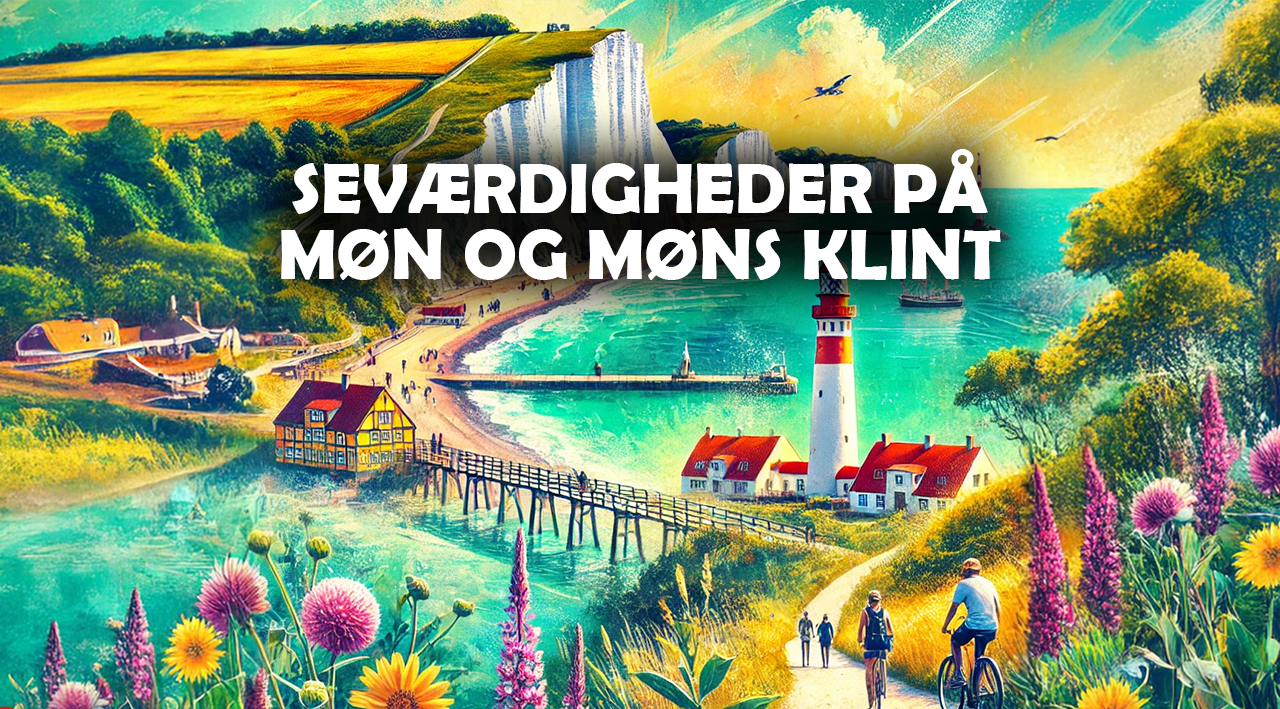
Møn is full of exciting experiences for nature lovers, history enthusiasts and those seeking relaxation in beautiful surroundings.
Here are some of the most noteworthy attractions:
1. Møns Klint
Møns Klint is undoubtedly the island’s main attraction and one of Denmark’s most spectacular natural sights. The cliffs stretch for seven kilometres and rise up to 128 metres above sea level.
Here you can:
- Explore the beach and find fossils such as sea urchins and fossilised squid.
- Walk along the cliff paths through the beautiful Klinteskov forest, enjoying views of the Baltic Sea.
- Explore Geocenter Møns Klint, an interactive museum that tells the story of the cliffs’ geology, nature and history.
2. Stege – Møn’s Historic Market Town
Stege is a charming town with a rich history dating back to the Middle Ages.
Here you can:
- Walk along the old town walls and see Stege Gate, one of Denmark’s best-preserved medieval gateways.
- Visit Thorsvang Collectors’ Museum, a charming museum filled with nostalgia from the 20th century.
- Enjoy a delicious dinner at one of the town’s many restaurants serving locally sourced ingredients.
3. Elmelunde Church and Its Wall Paintings
Elmelunde Church is known for its well-preserved wall paintings from the 15th century. Created by the renowned Elmelunde Master, the paintings depict biblical scenes and offer a unique insight into medieval art and faith.
4. Nyord – A Step Back in Time
The small island of Nyord, connected to Møn by a causeway, is an experience in itself. The island is car-free and exudes an idyllic charm with its small houses and narrow streets.
On Nyord, you can visit:
- Ulvshale Nature Centre, where you can learn about the island’s unique natural environment.
- Nyord Church, a rare octagonal church from the 19th century.
- Local craftspeople and producers selling honey, pottery and other local products.
5. Liselund Castle Park
Liselund is a romantic castle park dating from the 18th century, situated close to Møns Klint. The park is perfect for a relaxing walk and offers beautiful surroundings with small lakes, bridges and old trees. The little Liselund Castle is a gem and a popular venue for weddings and other celebrations.
6. Fanefjord Church
Fanefjord Church is another of Møn’s beautiful medieval churches known for their wall paintings. The church is situated close to Fanefjord Forest and offers a peaceful atmosphere.
Nature and Outdoor Experiences on Møn
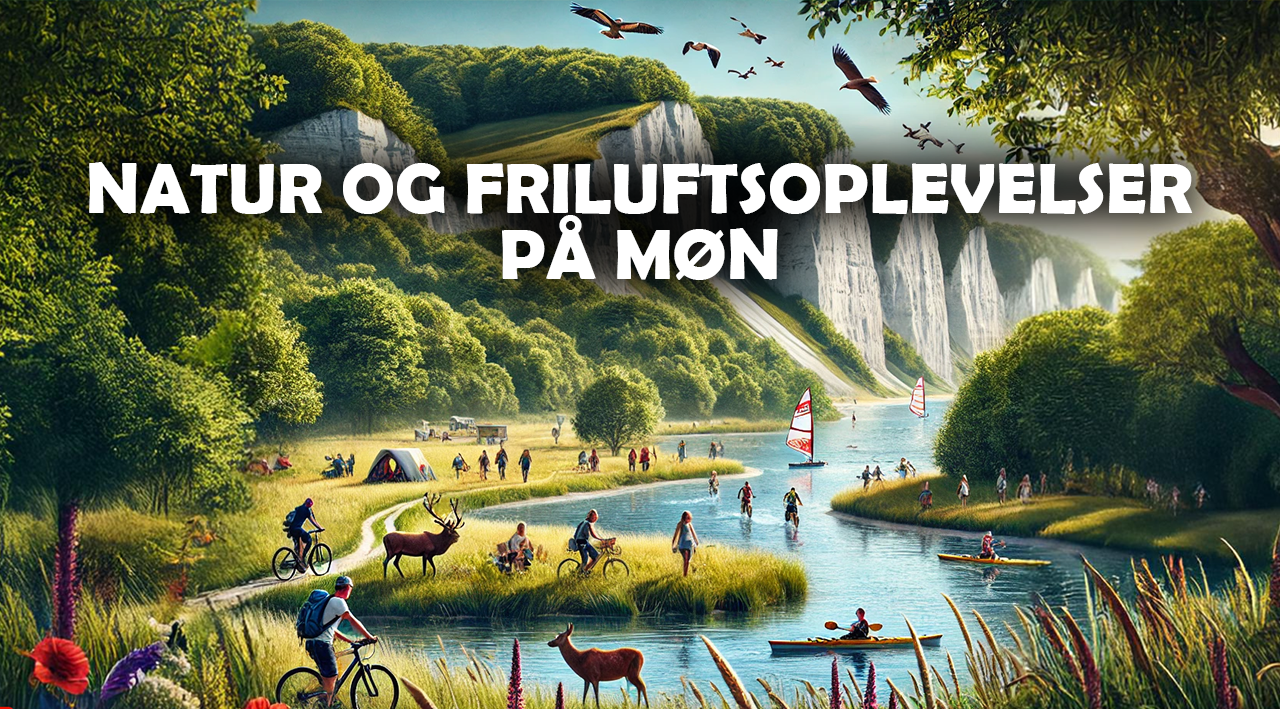
Møn is a paradise for nature lovers, and the island’s varied landscapes make it perfect for outdoor activities.
Here are some of the best outdoor experiences:
1. Walking and Cycling
Møn is known for its many walking and cycling routes. Klinteskov forest and the open fields offer fantastic opportunities to explore the island at your own pace.
Try:
- Camønoen, Denmark’s friendliest walking route, which takes you through the island’s most scenic areas.
- The Realm of the Sea Trout, a route designed for anglers but also popular with cyclists.
2. Stargazing – Dark Sky Møn
Møn is one of the few places in Denmark where you can experience a truly dark night sky. The island has been awarded Dark Sky Park status, meaning that light pollution is minimal and the starry sky can be enjoyed in all its splendour. Visit Møns Klint at night for an unforgettable experience.
3. Kayaking and Sailing
Møn is surrounded by water and is perfect for kayaking and sailing. Explore the small coves, bays and lagoons along the coast, or enjoy a peaceful boat trip in Stege Bay.
Practical Tips for Visiting Møn
Transport
Møn is easily accessible via the bridge from Zealand. Travelling by car is the easiest way to get around, but the island is also ideal for cycling, and local bus services are available.
Accommodation
Møn offers a wide range of accommodation options, from cosy bed and breakfasts to luxurious hotels. Campsites and holiday homes are also popular choices, especially for families and those wanting to get close to nature.
Local Delicacies
Møn offers plenty of local specialities. Try Møn-is ice cream, made with locally sourced ingredients, or sample the island’s organic honey and beer from Bryghuset Møn.
Conclusion
Møn and Møns Klint offer something for everyone. From the cliffs’ spectacular scenery to the island’s historic churches and charming villages, there is always something to discover. Whether you enjoy walking, cultural history or simply want to take in some of Denmark’s most impressive views, Møn will not disappoint. Plan your visit and let this guide lead you to the best experiences on this unique island!
If you need more inspiration for a visit to Møn and Møns Klint, watch this video – Møns Klint – a Natural Wonder in Denmark
If you know Møn or live on the island, we would love to hear your thoughts and/or suggestions in the comments section about other exciting attractions and experiences on Møn and at Møns Klint