Electricity, gas, and heating are among the regular fixed expenses in most Danish households – and that is precisely why even small price differences and adjustments can have a significant impact on household finances over time. Many people simply pay their energy bills without really taking a closer look at them. This is understandable because the energy market can seem complicated, with changing prices, long contracts, binding periods, and technical terms that are not always easy to understand. But this is often where a large and overlooked opportunity to save money can be found.
At a time when energy prices can fluctuate significantly, and when both personal finances and sustainability play a greater role in everyday life, it makes even more sense to make a conscious choice when it comes to your utility providers. It is not only about finding the lowest price right now, but also about choosing solutions that suit your consumption, your type of home, and your everyday life. A cheap electricity provider is not necessarily the best choice if the terms are unclear, customer service is poor, or prices can change quickly without warning.
This guide is created for those who want a clear overview and peace of mind – without having to spend hours reading the fine print. Here, we take a closer look at how you can save money on electricity, gas, and heating in a smart and realistic way. We look at what you should pay attention to when comparing prices, which pitfalls are worth avoiding, and how you can determine whether a utility provider is genuinely both affordable and reliable. At the same time, you will gain insight into how your own energy consumption plays a crucial role and how small changes in everyday life can make a noticeable difference to your finances.
Whether you live in an apartment, townhouse, or detached house, and whether your energy consumption is high or low, there is almost always money to be saved by becoming a little more conscious of your choices. The goal is not to reduce your comfort, but to use energy more intelligently and pay a fair price for it. With the right knowledge, it becomes much easier to make decisions that benefit both your finances and your peace of mind.
IN SHORT - Energy is a necessity – but unnecessarily high energy bills do not have to be. This guide helps you take control and find your way to cheaper and more reliable energy solutions that suit your lifestyle and budget.
Understand Your Energy Supply – What Are You Paying For?
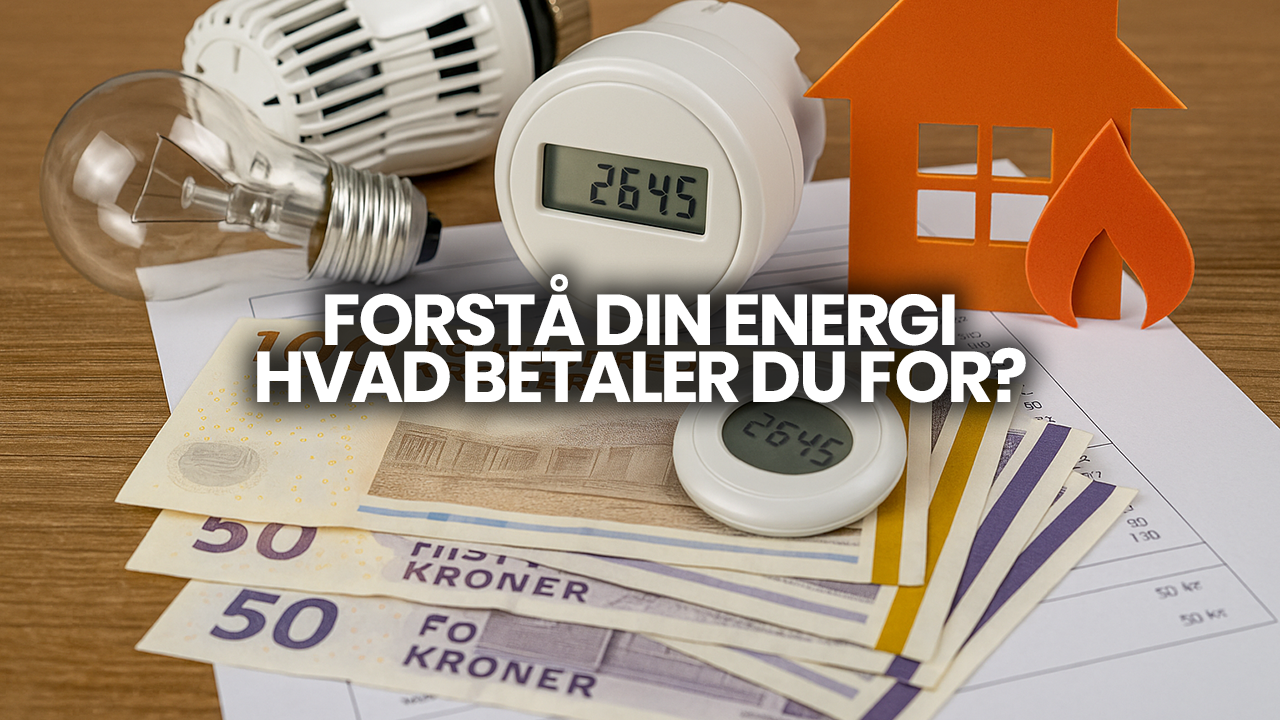
When the bill from your utility provider arrives in your mailbox or digital inbox, it can be difficult to understand. Many people only look at the total amount, but behind that figure are several different charges. By understanding what you are actually paying for, you gain a better overview – and a stronger starting point for saving money. Your energy bill typically consists of three parts: the actual consumption (the energy you use), transportation and distribution (the cost of delivering the energy to your home), and taxes and VAT paid to the government.
In addition, there may be subscription charges, fees, or payments for special services. It is only the energy portion that you can realistically save money on by changing suppliers – but this can still make a significant difference. Many consumers mistakenly believe that everything is set by the government, but in reality, electricity and gas prices are partly subject to competition. Once you understand the breakdown, it becomes easier to see where there are opportunities to save. This could be by reducing your consumption, switching to a cheaper utility provider, or checking whether your fees can be reduced.
Checklist – What You Typically Pay For on Your Energy Bill
✅ Actual Consumption on Your Energy Bill – The price of the amount of electricity, gas, or heating you use.
✅ Transportation and Distribution of Your Energy – Payment for having energy delivered through the electricity grid, gas pipelines, or district heating pipes.
✅ Subscription/Fixed Energy Charge – Fixed amounts you pay regardless of your energy consumption.
✅ Taxes and VAT on Your Energy – A large portion of your energy bill goes to the government.
✅ Energy-Related Fees – For example, billing fees, reminder fees, or moving fees.
✅ Possible Additional Energy Services – Extra services that some utility providers include.
Why Are There Such Large Price Differences Between Energy Companies?
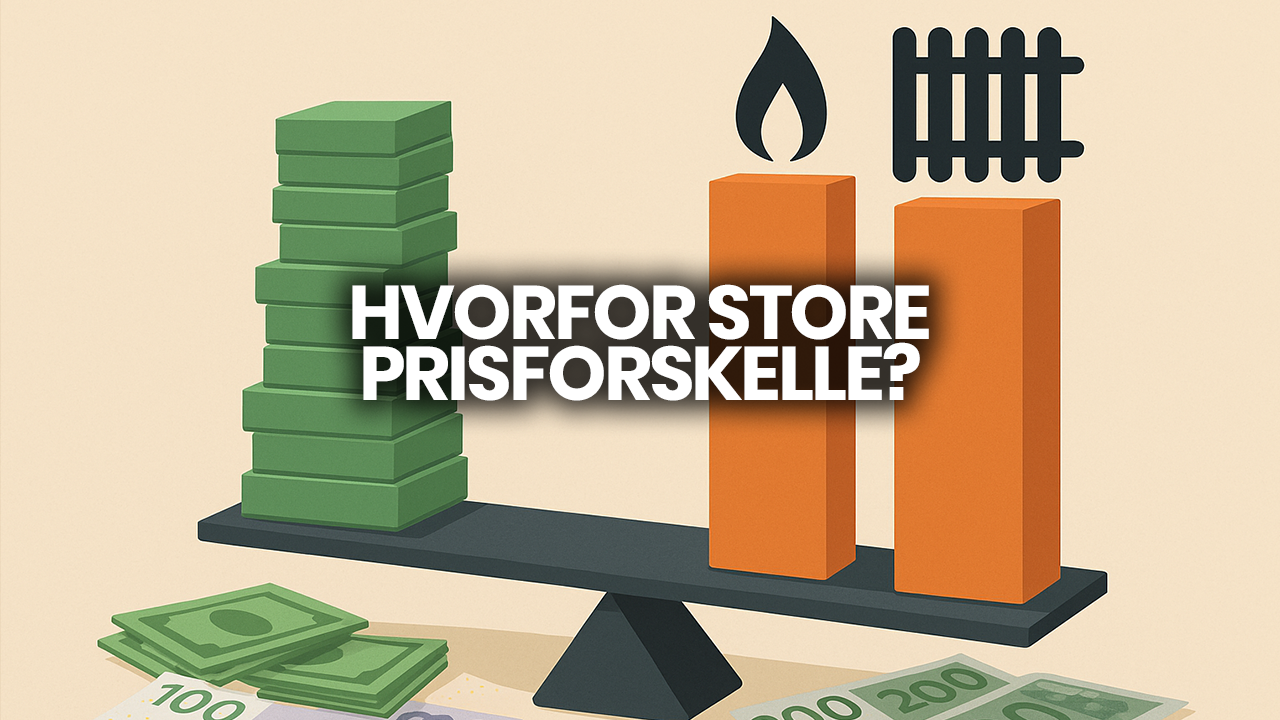
Many people wonder why the price of electricity, gas, and heating can vary so much from one company to another – especially when the product is ultimately the same. The difference often lies in the terms offered by the companies and how efficiently they run their businesses. Some companies purchase energy through long-term agreements, which can provide more stable prices, while others buy on the spot market, where prices fluctuate from day to day.
In addition, companies have different administrative costs, customer service levels, and ways of pricing their products. Consumers can also experience large price differences because of fees and subscription charges, which can quickly make an otherwise cheap price more expensive. That is why it is important not to look only at the price per kilowatt-hour or cubic meter, but at the entire package. The overall picture determines how expensive or inexpensive your choice will ultimately be. In summary, energy companies compete on price, customer service, green credentials, and subscription types.
Example of Pricing by Energy Companies:
Variable VS. Fixed Prices from Energy Companies
Fixed Energy Price - You pay the same price per kWh throughout the entire contract period (typically 6–24 months). This provides predictability, but it can be expensive if market prices fall.
Variable Energy Price - The price follows the electricity exchange (Nord Pool) and can fluctuate from day to day. It is often cheaper in the long run, but comes with greater uncertainty.
Spot Price With a Markup from Energy Companies
Many companies offer an agreement with a spot price + markup. The spot price is the market price, while the markup covers administration and profit. Key Point - Compare the markup, not just the spot price.
Checklist – Reasons for Price Differences Between Energy Companies
✅ Energy Companies' Purchasing Strategy – Fixed-price agreements vs. spot-price purchasing.
✅ Administrative Costs at Energy Companies – Differences in how companies operate and how efficiently they are managed.
✅ Subscription Charges from Energy Companies – Fixed fees can vary significantly.
✅ Customer Service and Support from Energy Companies – Some companies charge extra for greater availability or special services.
✅ Green Energy or Traditional Energy Sources from Individual Energy Companies – Sustainable solutions can cost more (but may provide additional value).
✅ Promotional Offers from Energy Companies – Low energy prices during the first year, followed by higher prices.
✅ Fees from Energy Companies – For example, moving fees, payment fees, or charges for paper invoices.
Watch Out for Typical “Customer Traps” from Energy Companies
Many energy companies attract customers with low prices at the beginning, but over the long term, your bill may become higher than you expect.
Here are some common pitfalls related to energy supply that you should be aware of:
⚠️ Introductory Energy Supply Offers – Very low prices during the first few months, followed by a significant increase.
⚠️ Binding Periods for Energy Supply – You may be locked into an agreement for up to 6–12 months without the option to switch.
⚠️ Hidden Energy Supply Fees – For example, billing fees or charges for changing your payment method.
⚠️ Energy Supply Packages – Additional services such as a “green guarantee” or service packages that you may not need.
How to Find the Cheapest Utility Provider
Finding the cheapest utility provider is not only about looking at the price per kWh or cubic meter of gas. You need to look at the entire agreement: fixed fees, binding periods, payment terms, and any additional charges. Many consumers discover too late that the “cheapest offer” ends up being more expensive because there are hidden costs or prices that increase after an introductory period.
A good tip is to use comparison websites where you can view prices across different companies. However, remember that you should always read the fine print and not simply settle for the price shown at the top of the list. You should also investigate the reliability of the company – because even if the price is low, poor customer service or unclear agreements can make the experience costly in the long run. When you combine price comparisons with a critical review of the terms and conditions, you are in a strong position to choose the company that gives you the best value for your money.
Inspiration List – Key Factors for Finding the Cheapest and Best Energy Company
✅ Use Price Comparison Websites for Energy Companies – For example, elpris.dk (official and neutral), forsyningstilsynet.dk, and gasprisguiden.dk. Here, you can enter your consumption and get an overview of the cheapest agreements – remember to check the price, subscription fee, and binding period.
✅ Look at the Total Cost of Energy Supply – Read the fine print, including fixed charges, subscriptions, and fees.
✅ Check Binding Periods for Energy Supply – Avoid long agreements that lock you into a poor price.
✅ Examine the Pricing Structure of Your Energy Supply – Spot price, fixed price, or variable price – which one suits your consumption?
✅ Consider Green Electricity for Your Energy Supply - If sustainability is important to you, you can choose electricity from renewable energy sources. The price is often only slightly higher – and sometimes even lower due to public subsidies.
✅ Be Aware of Introductory Offers for Your Energy Supply – Prices that increase after a few months.
✅ Check the Energy Company's Credibility – Read customer reviews and experiences. For example, check the company's ratings on Trustpilot.
✅ Ask About Additional Energy Supply Services – For example, green electricity or service packages that cost extra.
✅ Compare Several Energy Companies – Never settle for the first offer you find.
Electricity, Gas, and District Heating – Which Type of Energy Makes the Most Sense for You?
When choosing an energy source, it is not only about price, but also about what best suits your home and your needs. Electricity, gas, and district heating each have their own advantages and disadvantages, and choosing the right solution can make a significant financial difference.
Electricity can be flexible and environmentally friendly, especially when combined with heat pumps or solar panels.
Gas has traditionally been a popular choice for heating, but prices can fluctuate greatly, and more households are looking toward alternatives for both environmental and financial reasons.
District heating is often a stable and inexpensive solution in areas where it is available, but at the same time, you depend on one provider and cannot freely switch.
By considering both your long-term financial goals and your energy consumption, you can find the solution that makes the most sense for you – both now and in the future.
Electricity - Can You Switch Electricity Providers?
Yes, everyone is free to choose their electricity provider – regardless of where in the country they live. Your grid company (the company that owns the cables) remains the same, but the electricity itself and the price are provided by the supplier you choose.
🔄 Flexible electricity solution that can be combined with solar panels and heat pumps.
🌱 Environmentally friendly electricity solution if the power comes from green sources.
📈 Electricity prices can fluctuate significantly depending on the spot market.
Gas Provider - Can You Freely Switch Gas Companies?
Yes, the gas market is also open to competition. However, many homes do not use gas as their primary energy source. If you live in a house with a gas boiler, you should regularly check whether you can get a better deal.
🔥 Gas provides fast and efficient heating.
📉📈 Gas prices can be low during certain periods, but they can also be very unstable.
🌍❌ Gas is not the most climate-friendly solution in the long term.
District Heating Provider - Not a Free Choice
District heating is typically supplied by one provider in a particular area. This means that your home must be located in an area connected to a district heating network. Since you are often dependent on one supplier, this can limit competition.
You therefore cannot switch your district heating provider, but you can:
🏠🔧 Minimize district heating consumption through energy-efficient renovations.
🤝💳 Negotiate payment arrangements for your district heating.
🚫💸 Avoid unnecessary fees related to your district heating supply.
3 Questions That Help You Choose the Right Type of Energy for Your Home
1️⃣ What types of energy supply are available in my area? – District heating is often the cheapest option, but it is only possible if your home is connected to the district heating network.
2️⃣ How flexible do I want to be with my energy provider? – Electricity gives you the freedom to switch suppliers and can be combined with solar panels or a heat pump.
3️⃣ How stable do I want my energy expenses to be? – Gas and electricity prices can fluctuate significantly, while district heating typically provides more predictable bills.
How to Save More on Energy – Beyond Switching Energy Companies
Switching to a cheaper utility provider can result in noticeable savings, but the greatest savings are often achieved when you also change your daily habits. Even small adjustments can significantly reduce your consumption of electricity, gas, and heating – without compromising the comfort of your home.
It is about being aware of how energy is used. From smarter heating and insulation to more conscious use of electrical appliances and household habits. The more you can reduce your actual consumption, the less impact price fluctuations and fees from utility providers will have. In this way, you gain control over both your energy bill and your carbon footprint.
Save on Energy Consumption in Your Home
Here are the most effective ways to lower your energy bills without compromising comfort in your home:
💡 Use LED light bulbs in your home.
⏻ Turn off devices that are left on standby in your home.
⏱️ Install timers for electric heating and your hot-water tank in your home.
🔌♻️ Replace old household appliances with energy-efficient models.
🧺🌬️ Wash and Dry Smartly in Your Home – Fill the washing machine completely, wash at lower temperatures, and dry clothes on a rack instead of using a tumble dryer.
☀️🪟 Make Use of Natural Heat in Your Home – Open curtains during the day and allow warmth from the sun to enter.
🌡️⚙️ Optimize Heating in Your Home – Lower the temperature by 1–2 degrees and use thermostats effectively.
Use Electricity When It Is Cheaper in Your Home
With variable electricity prices, you can save money by using electricity outside peak hours in your home:
🌙⏰ After 10 PM and before 6 AM, electricity is often cheaper in your home.
🛌☀️ Electricity is often cheaper on weekends and in the mornings.
📱📊 Use apps such as Watts or Min Strøm to optimize and reduce electricity costs in your home.
Invest in Smart Technology to Reduce Energy Consumption in Your Home
🌡️📡 Use smart thermostats (such as Tado or Netatmo) in your home.
⏱️⚙️ Make Use of Timers in Your Home – Use programmable thermostats or smart systems for heating and electricity.
🚗🔌 If you have an electric car, use scheduled charging. You can read more about electric cars in our article - Good Tips for Electric Cars Versus Hybrid Cars - Which Is Better for the Environment
☀️🔋 Use solar panels and battery storage in your home.
You can find inspiration on how to use gadgets to reduce energy consumption in your home in our article - Smart Gadgets for the Home - Technology That Makes Your Home Smarter and More Efficient
Quick Energy Savings – 3 Measures That Save the Most Right Now in Your Home
💡 Lower the Temperature by 1–2 Degrees in Your Home – This can reduce your heating bill by up to 5–10%.
💡 Turn Off Standby Power Consumption in Your Home – Small devices can collectively cost hundreds of kroner per year.
💡 Switch to LED Light Bulbs in Your Home – This immediately reduces electricity consumption and quickly pays for itself.
The 5 Most Common Mistakes With Energy Companies – And How to Avoid Them
When it comes to electricity, gas, and heating, many consumers make the same mistakes again and again – often without realizing it. Energy companies are not something people tend to switch frequently, and for that very reason, small poor choices can end up costing a lot over time. Fortunately, the most common mistakes are relatively easy to avoid once you know what to look out for. Here, we go through the five classic pitfalls – and how to avoid them.
One of the most common mistakes is never reviewing your agreement after signing it. Many people choose an energy company when moving home or because of a promotional offer and then completely forget to follow up. Prices, terms, and fees can change over time, and an agreement that was attractive two years ago is not necessarily competitive today. By checking your agreement once a year, you can often identify hidden price increases or find cheaper alternatives without changing your consumption.
Another common mistake is being tempted by introductory offers without looking at the long-term price. Many energy companies advertise low prices for a short period, after which the price increases significantly. If you focus only on the starting price and do not read the fine print, you may end up with an expensive agreement once the promotional period ends. The solution is to look at the total price over time and find out what the price will be once the introductory offer expires.
A lack of understanding of your own consumption is a third mistake that costs many people money. Without insight into when and how you use the most energy, it is difficult to choose the right type of agreement. Some people pay for a fixed-price agreement even though they would benefit from a variable price – or vice versa. By gaining an overview of your consumption patterns, you can choose an agreement that suits your everyday life and makes better use of the cheapest times of day.
A fourth mistake is overlooking fees and additional costs. Even though the actual price per kWh or the heating price may appear low, additional charges for payment, billing, or administration can quickly make the agreement more expensive than expected. Many people only discover these costs when the bill arrives in their digital mailbox. Therefore, it is important to review the entire pricing structure and not focus only on the price highlighted in advertisements.
The final, but very common mistake is underestimating the value of good customer service and transparent terms. An energy company with poor communication, long response times, or unclear agreements can create frustration and uncertainty – especially if errors occur in billing. The cheapest option is not always the best if it results in additional hassle and a lack of clarity. By choosing a company with clear agreements and proper customer service, you gain both peace of mind and better control over your finances.
In short, it is about being an active consumer. By avoiding the five mistakes above, you can save money, reduce frustration, and secure an energy solution that better suits your needs – both now and in the longer term. Small adjustments to your choices can make a surprisingly large difference to your energy bill.
Checklist – 5 Common Energy Mistakes in Your Home and How to Avoid Them
❌ Mistake 1 - Focusing Only on the Kilowatt-Hour Price in Your Home
👉 Always look at the total price, including subscriptions, fixed charges, and fees.
❌ Mistake 2 - Forgetting the Binding Period for Your Energy Supply
👉 Check how long you are tied to the agreement – and avoid agreements that you cannot easily leave.
❌ Mistake 3 - Overlooking Introductory Offers for Your Energy Supply
👉 Be aware that the price often increases significantly after the first few months.
❌ Mistake 4 - Staying With the Same Energy Agreement for Too Long and Not Regularly Comparing Energy Companies
👉 Use comparison websites at least once a year to compare your agreement with the current market.
❌ Mistake 5 - Forgetting About Terms and Hidden Fees Related to Your Energy Supply
👉 Always read the fine print and ask about billing fees, reminder fees, and additional services.
How to Avoid Common Mistakes With Energy Companies
1️⃣ Carry Out an Annual Review of Your Energy Supply – Review your energy agreement once a year and compare it with other energy companies.
2️⃣ Always Read the Fine Print About Your Energy Supply – Check the binding period, fees, and price increases after introductory offers for your energy supply.
3️⃣ Calculate the Total Cost of Your Energy Supply – Look at the entire energy bill, including fixed charges, subscriptions, and fees, not only the price per kWh or m³.
Which Energy Companies Perform Well?
Here Is an Overview of Some Energy Companies That Often Score Highly on Both Price and Customer Satisfaction (Based on Independent Comparisons):
Company ------ Characteristics ----------- Recommended For
Norlys Energi ------- Good spot-price agreements ----- High-consumption households
OK --------- Frequent promotional offers, consistently low prices -------- Average families
Nettopower --------- No subscription fee, low markup ----------- Price-conscious consumers
Ewii ---------------- Green electricity as standard ----------- Environmentally conscious consumers
Velkommen --------- Good customer service and app ------------- First-time switchers
(Please be aware that this can change – always check current information)
How to Switch Energy Companies Step-by-Step
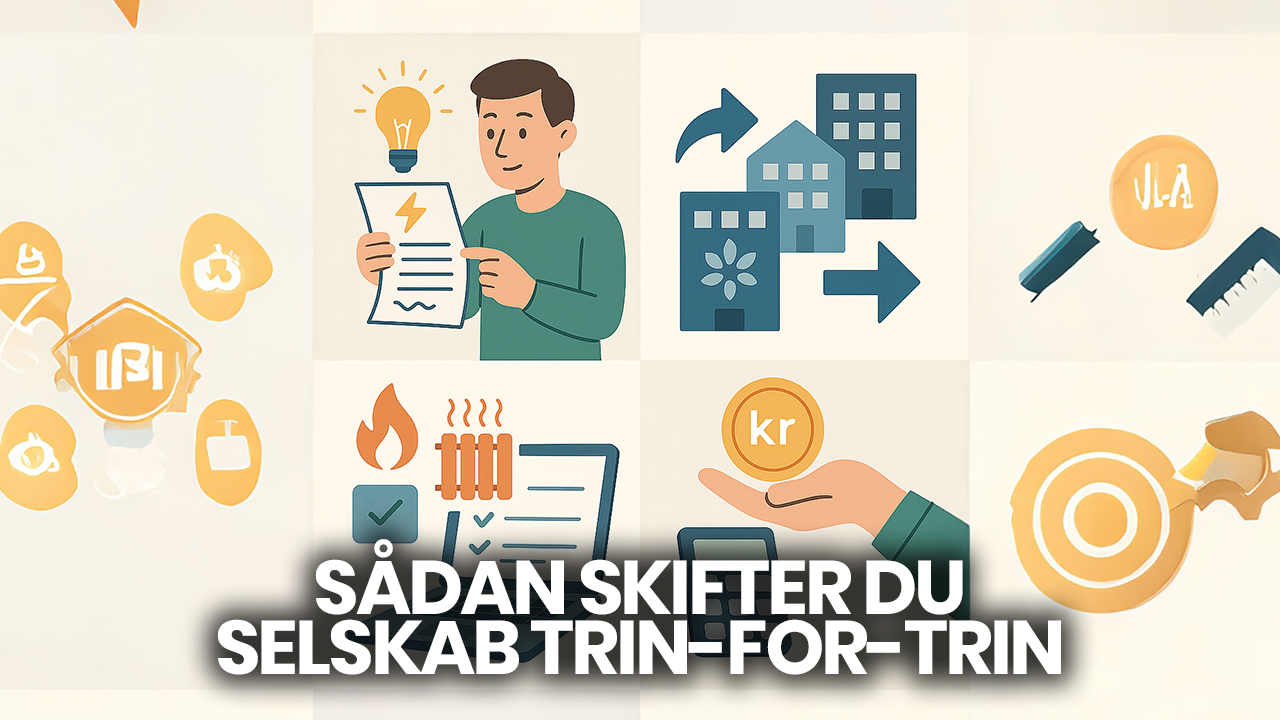
Switching energy companies does not have to be complicated – but many people are still discouraged by the process. In reality, it is much simpler than most people think. Once you have found a cheaper and more reliable company, the only thing left is to complete the switch.
Most new providers take care of terminating your old agreement and handle the practical details, so you do not risk being left without an energy supply. Your main responsibility is to make the right choice, check the terms, and keep track of the dates. By following a step-by-step approach, you can quickly switch companies and begin saving money – without any interruption to your energy supply.
Checklist – 8 Steps to a Smooth Switch of Energy Companies
✅ 1. Find Your Current Energy Price and Consumption - Check your latest energy bill or log in to your current energy company's website.
✅ 2. Compare Energy Prices and Terms – Use official websites such as elpris.dk and check the kWh/m³ price, fixed charges, and binding period.
✅ 3. Read the Fine Print About Energy Supply – Pay particular attention to fees, introductory offers, and the duration of the energy price agreement.
✅ 4. Choose a New Energy Company – Once you have found the best agreement, sign up directly with the new energy provider through the company's website.
✅ 5. Confirm the Change of Energy Supplier – You will receive confirmation with the date on which the new energy supply takes effect, so you know when the agreement begins.
✅ 6. Wait for the Automatic Cancellation of Your Old Energy Agreement – In most cases, the new energy company will cancel your old energy agreement for you.
✅ 7. Note the Start Date and Prices of Your New Energy Supply – This allows you to check later whether everything matches correctly on your first energy bill.
✅ 8. Follow Up on the First Invoice for Your Energy Supply – Check that the energy price matches what was agreed and that no extra fees have been added.
3 Quick Tips for an Easy Switch of Energy Companies
1️⃣ Take a Photo of Your Energy Meter – This gives you documentation of your energy consumption on the day you switch.
2️⃣ Save Your Energy Agreement and Confirmation – Keep both the old and new energy contracts so you can compare them.
3️⃣ Check Introductory Offers for Energy Supply – Make a note in your calendar of when any promotional energy price expires so you can take action in time.
What About Solar Panels, Heat Pumps, and Self-Sufficiency?
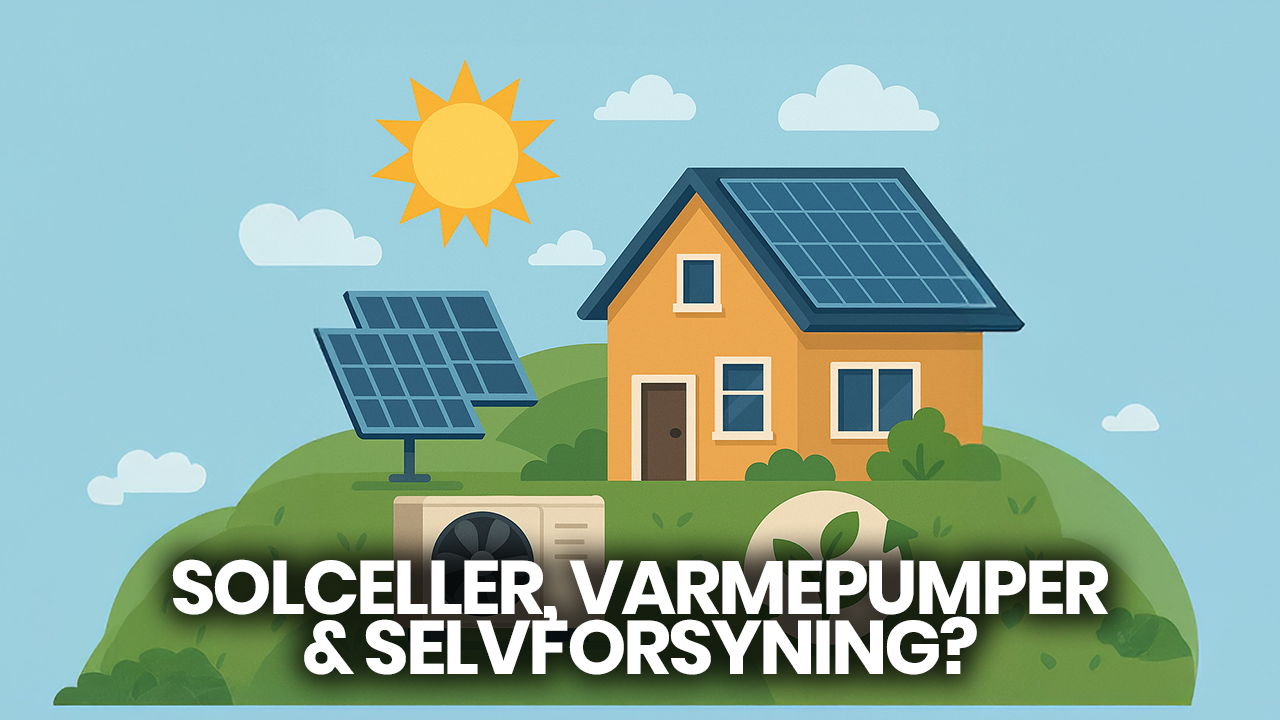
For many households, it is no longer only about finding the cheapest utility provider – it is also about reducing dependence on traditional energy sources altogether. Solar panels, heat pumps, and other self-sufficiency solutions are becoming increasingly popular because they can provide significant long-term savings while also reducing your carbon footprint.
Solar panels can produce a large proportion of the electricity you use in your home, especially during the summer months, and surplus electricity can be sold back to the grid. Heat pumps are an efficient replacement for oil or gas boilers and often provide both lower energy costs and more sustainable heating. For some households, a combination of solar panels and a heat pump can make the home almost self-sufficient.
Although the initial investment can be high, there are subsidy schemes and financing options that make these solutions more accessible. It is therefore worth investigating whether self-sufficiency is an option that makes sense for both your finances and your energy consumption. In addition, green energy solutions often make a property more attractive when it is sold.
Solar Panels for Your Home
If you own your home, solar panels can be a good investment – especially with rising electricity prices. You produce your own electricity and reduce your dependence on electricity prices. In addition, it is an environmentally friendly choice that contributes to a greener future. Green energy solutions.
Things to Consider About Solar Panels:
🧭 Optimal placement of solar panels facing south.
🔌 Connecting solar panels to the electricity grid and arranging billing.
💰 Public subsidies and tax deductions for solar panels.
You can read more about solar energy in our article - Good Tips on How to Achieve Energy Savings at Home
Heat Pumps for Your Home
Heat pumps can be a good alternative to gas or oil heating in your home and are often cheaper. Choose a model with a high SCOP (energy efficiency). They require an investment, but can pay for themselves over time – especially with energy subsidies.
A combination of solar panels + a heat pump can often cover a large proportion of a household's energy needs.
Hybrid Solutions for Your Home
Many people combine solar panels and heat pumps in their homes – and use batteries to store electricity. In this way, as mentioned above, they can often become almost independent of energy companies over time.
Inspiration List - Are Solar Panels or a Heat Pump a Good Energy Investment for You?
1️⃣ Map Out Your Home's Energy Consumption – Look at your current consumption of electricity, gas, or oil. The higher your consumption, the greater the potential savings may be when switching to a green solution.
2️⃣ Investigate Energy Subsidies and Support Schemes for Your Home – Check whether you can receive financial support from the government, municipality, or energy company. This can significantly shorten the payback period.
3️⃣ Make a Financial Calculation for New Energy Solutions in Your Home – Compare the investment cost with the expected annual savings. Calculate how many years it will take for the solution to pay for itself.
The Future of Energy Consumption – What Should You Prepare For?
The energy market is changing, and as a consumer, it is important to think ahead. Electricity, gas, and heating prices are likely to continue fluctuating, and political decisions concerning climate and sustainability will affect which forms of energy we use in the future.
This means that you should not focus only on what is cheapest right now – but also on how to secure a stable and financially responsible solution in the longer term. Technologies such as solar panels, heat pumps, smart meters, and energy storage will play an increasingly important role in household energy consumption. At the same time, everyday energy savings will become even more important, as efficient consumption both reduces your bill and lowers pressure on the electricity grid.
The Market Is Moving Toward More Energy-Friendly Solutions Such As:
☀️ Self-sufficiency through solar energy in the home.
🌾 Biogas as an energy supply for the home.
🌱 Climate-friendly district heating for the home.
🏘️ Local energy communities for supplying energy to homes.
As a consumer, you will have more choices in the future, along with greater responsibility for your own household energy decisions.
By staying ahead of developments, you can ensure that your home is ready for the energy market of the future – and that you continue to get the best value for your money even as conditions change.
Inspiration List – How You Can Prepare for the Future of Energy Consumption
✅ Consider Self-Sufficient Energy Solutions for Your Home – Solar panels, heat pumps, and battery storage can reduce your home's dependence on energy companies.
✅ Follow Developments in Energy Taxes and Regulations for Your Home – New political measures may change which energy supply options are the most financially beneficial.
✅ Invest in Energy-Efficient Solutions for Your Home – For example, better insulation, heating controls, and A+++ household appliances.
✅ Keep an Eye on Smart Technologies for Your Home – Smart electricity meters and apps provide greater control over your consumption.
✅ Plan for the Long Term – Consider finances, comfort, and the environment when choosing energy solutions for your home.
✅ Remain Flexible – Choose solutions that can adapt to changes in prices and the energy market.
Conclusion
Saving money on electricity, gas, and heating in your home is not only about finding the cheapest utility provider – it is about understanding the entire picture surrounding energy supply to your home. When you know how your bill is structured, why prices vary, and what options you have for switching providers or adjusting your consumption, you are in a much stronger position as a consumer.
Small changes can make a big difference to the cost of energy in your home - by choosing the right energy company, avoiding common mistakes, and thinking about energy savings in everyday life, you can cut hundreds or even thousands of kroner from your annual energy bill. At the same time, you contribute to more sustainable energy consumption, benefiting both your finances and the environment.
In summary, with a little effort regarding your utility provider, you can:
💳 – Get lower energy supply bills for your home.
🌱 Get green energy and make responsible energy choices for your home.
🤝 Get transparent energy supply agreements for your home and proper customer service.
Make it a habit to review your household energy agreements once a year. Use the many comparison tools available, and do not be afraid to switch – it is easy and can make a noticeable difference to your finances.
The most important message is that you have far more control over your household energy supply than you may think. By being critical, comparing regularly, and considering new energy solutions, you can secure a stable, affordable, and future-proof energy supply for your home.
Mini Guide – How to Reduce Your Household Electricity, Gas, and Heating Costs With Affordable and Reliable Utility Providers
Getting your household energy expenses under control is one of the most effective ways to create more room in your personal budget. Electricity, gas, and heating are necessities, but the price you pay for them does not need to be higher than necessary. When you combine conscious choices of utility providers with a good understanding of your own consumption, you can achieve noticeable savings without compromising comfort or peace of mind.
This mini guide is a summary of the article above and gives you a solid overview of what you should specifically focus on if your goal is to save money on household energy in a smart and sustainable way.
🔍 Gain Insight Into Your Home's Everyday Energy Consumption
It is difficult to pay less for electricity and heating if you do not know how energy is being used in your home. By reviewing your bills and tracking your consumption over time, you gain a clear picture of when energy usage peaks and where there are opportunities to reduce it. This insight makes it much easier to choose an agreement that matches your everyday life – and is a crucial step if you want to save money on energy for your home rather than simply hoping for lower prices.
💰 Compare Utility Providers With a Focus on the Overall Cost for Your Home
A low price per kWh is only one part of the calculation. To achieve cheaper household energy, it is also important to look at binding periods, adjustment terms, and any additional charges. Many people find that an apparently cheap agreement becomes more expensive over time because of price increases or unclear conditions. By comparing the overall package instead of focusing only on the starting price, you are in a much stronger position to save money on household energy in the long term.
📄 Transparent Agreements Without Hidden Costs From Utility Providers
Fees and additional payments are a classic energy trap. Small charges for administration, billing, or payment methods can quickly add up and reduce your savings. If you want to keep your energy expenses low, you should choose energy companies with clear and transparent agreements. Avoiding hidden costs is often one of the easiest ways to ensure that your efforts to save money on household energy are actually reflected in your bill.
🔄 Choose an Energy Pricing Type for Your Home That Matches Your Lifestyle
Fixed prices, variable prices, and spot prices do not suit every household equally. If you have the flexibility to move your consumption to cheaper times of day, variable prices may make sense. If you prefer stability and predictability, a fixed price may be the right choice. When your pricing arrangement suits your everyday life, it becomes easier to manage your budget and gradually reduce your electricity, gas, and heating expenses.
🌱 Green Energy Choices for Your Home Can Also Be Financially Smart
Environmentally friendly solutions do not necessarily have to be more expensive. Green electricity, energy-efficient district heating, or investments in solar panels can help lower your total energy costs over time. When sustainable choices are combined with reliable and competitively priced utility providers, you can contribute to the green transition while also saving money on household energy over time.
🏠 Use Less Energy in Your Home With Small, Smart Adjustments
A lower energy bill is not only about the price – it is also about consumption. Small changes such as better insulation, adjusting thermostats, using energy-efficient household appliances, and heating your home more consciously can make a noticeable difference to the cost of household energy. These improvements not only reduce expenses, but also increase everyday comfort and make your home less vulnerable to future price increases.
📞 Choose Utility Providers for Your Home With Proper Customer Service
An energy company should be easy to contact when questions or problems arise. Poor customer service can cost both time and money if problems take too long to resolve. By choosing a company that provides clear answers, easily accessible support, and transparent processes, you gain more than just peace of mind – you also have better conditions for keeping track of your energy consumption and paying less for it.
🔁 Review Your Household Energy Agreements Regularly
The energy market changes, and so does your consumption. By checking your agreements once a year, you can make sure you still have a solution that suits your home and your finances. This simple habit is often the key to keeping energy expenses low over time and continuing to save money on household energy without requiring major effort.
****************************************************************************
If you need additional tips on how to save money on your electricity bill, you can watch this video - Save Money on Electricity and Power
--------------------------------------------
If you have experience and/or knowledge of purchasing or switching energy services for your home from utility providers, we would be happy to hear your input and/or suggestions in the comments about other things people should consider when choosing or switching utility providers for their home, so that by choosing the right utility provider, they can save a significant amount of money every year.